Sunday, 11 September 2022

 External renovation of the Speyside Signal Box at Aviemore over 2nd to 5th September.


By Colin Frost

While we awaited the erection of the scaffold on Friday a small team of Mike, Neil, Roddy, Ray and I dug three holes under the veranda for the placement of extra timber supports, mixed concrete and filled the holes. The three beams were cut to length in the shed by Willie and the metal boots attached.  


The following day these 
supports were placed under the veranda, secured into position, primeand the first undercoat applied.


Now able to finally use
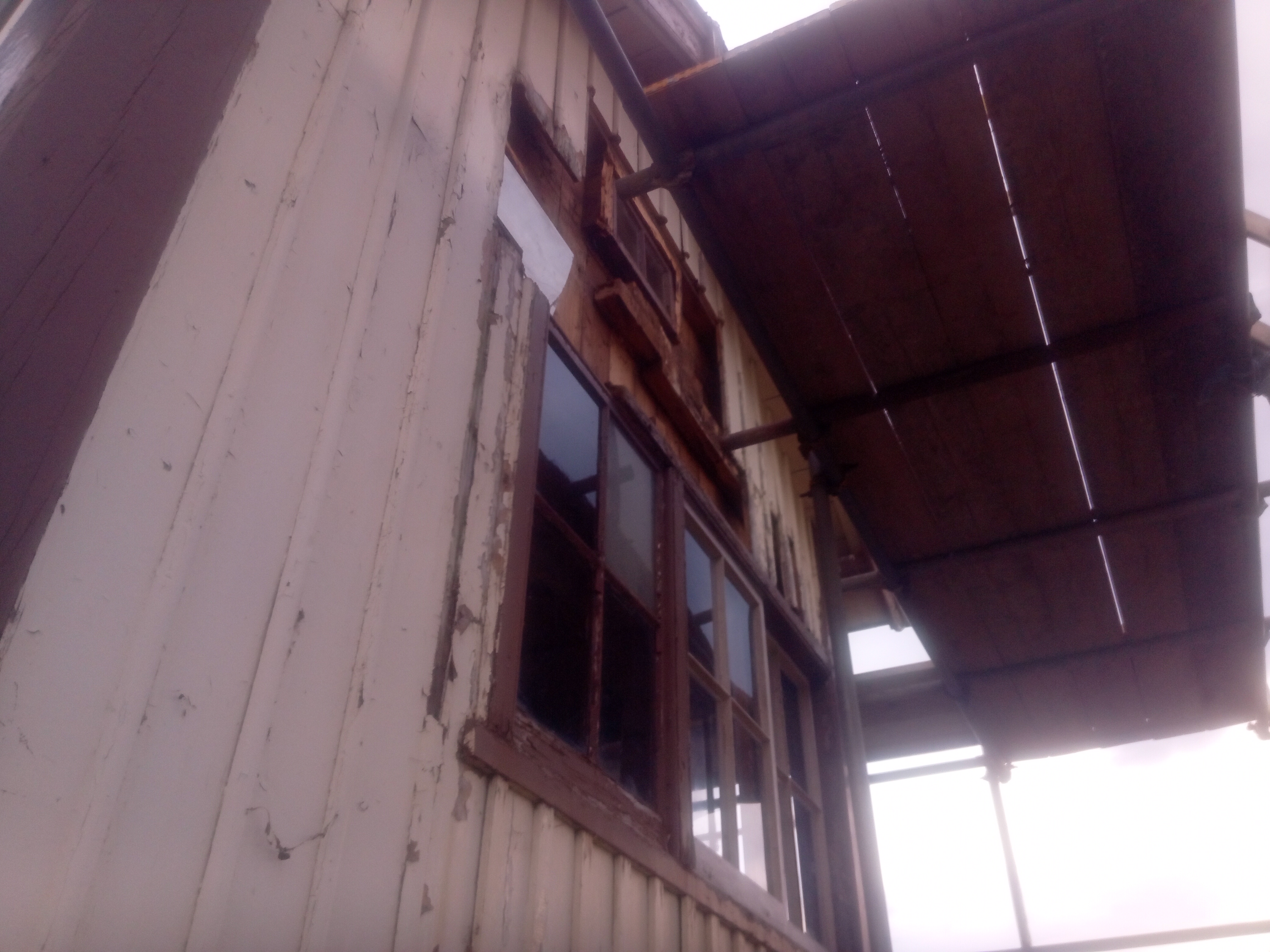
 the scaffold to gain access to the window level on the south side we commenced assessing and ripping out the rotten timber, of which there was plenty, we also removed nesting material and other debris that had accumulated between the inner and outer walls over time.  


Using timber that I had stored in the Lodge we commenced replacing the wall cladding, before travelling to the Boat to collect the final 3 stored planks and the remainder of the half-round strips that had been specially cut for the renovation of the North box last year.

Back at Aviemore we cut to size and installed further new pieces of wall cladding on the south wall, applied filler to some small gaps and primed


There is still more to be replaced before attempting to paint the corrugated iron roof weather permitting - next time.

(see enclosed photos)

Thanks to Mike Tough, Neil MacQueen, Roddy McPhee, Ray Kenyon and Colin Frost.

Tuesday, 16 August 2022

External renovation of the Speyside Signal Box at Aviemore continued

External renovation of the Speyside Signal Box at Aviemore

10th to 14th August,

By Colin Frost


While we are still waiting for the scaffolding to be erected, we were only able to concentrate on the lower portion of the box accessible by low ‘hop ups’.


Only Colin was available for the first three days, so work was concentrated on areas accessible from the veranda, loose putty was replaced on the windows and the window and surrounding timber-work sanded down and painted with two coats of undercoat.   Dan, Jim and Nick were available for the final two days when a great deal of progress was made with the west and east walls.


Being a live railway, train movements were observed and no work could commence on the west side until the coaching stock had been moved from the carriage shed at about 9am, and as the weather was very hot,  work on the west side was preferable in the morning.  The west and east sides and the north wall under the veranda have all been sanded down, and two coats of white undercoat applied.  


On the north wall rotten timber was cut out and new timber panels installed and primed.


All the painted areas are now ready for the final top coats to be applied, but this won’t be done until the remainder of the upper areas of the box have been finished.  Where is that scaffolding, which was ordered back in July and may not be available until mid-September!?

Work by Dan Courtier, Nick Courtier, Colin Frost & Jim Pittendrigh.

Wednesday, 10 August 2022

External Renovation of Speyside Signal Box

 External renovation of Speyside Signal Box at Aviemore

Over 27 – 30 July.


By Colin Frost 

The access staircase and veranda on the North face of the box are both in very poor condition, so the first task has been to take measurements and order new timber for the replacement of the staircase.   For which we are immensely grateful to Dave Childs who has taken the new build in hand.  


The
 repair to the decking of the veranda was our next task and-as the box is in daily use, we set up a temporary ladder access and blocked off the stairs.  The walkway is supported by three 6x 2inch timber beams, so the first 5ft of planks, forming the walkway, were removed and the top three inches of rotten timber in the centre beam cut out, this was repeated to a lesser extent on the other two beams and treated with Cuprinol preservative.  


New wood was then screwed down into place and primed. However as happens, further rotten timber then came to light on the east side beam and main NE corner vertical support of the building. After removing more rot, treating with Cuprinolnew timber was installed, so following two and a half days work, the walkway and staircase was restored to use. 

In the meantime another 5 planks of wall cladding had been delivered to Boat yard, so we proceeded there; cut to length two 4.2mtr planks (to fit the car) and stored the remainder under cover. 


Back at Aviemore we installed further pieces of wall cladding onto the south wall, applied filler to some small gaps and completed primer and undercoat painting on the newly installed timber. 


The plywood timber facing measuring 92 x 20inchs, which covers the exit of the signal wires and point rodding on the east side, has also now been replaced with a new sheet of thicker plywood(care of Ray) and transported in my car from Newburgh, anyone would think I had a van!!


(see enclosed photos) 

By Ray Kenyon and Colin Frost.


Sorry for the late posting Robert Law.

Tuesday, 26 July 2022

External renovation of the Speyside Signal Box at Aviemore.

 External renovation of the Speyside Signal Box at Aviemore. 

By Colin Frost

26 July 2022

Copyright Graham Maxton.
Following on from painting the outside walls of The Lodge accommodation block over the spring, Ray and Colin have commenced the much needed renovation of Speyside Box.

A little history about Speyside Cabin. Originally it was the former Garve West cabin and it was mounted at the end of the up platform. The structure is entirely original, until we have started this work. The cabin came available to the railway with the introduction of RETB on the Kyle route in 1984. The cabin was uplifted sometime after this but with no lever frame with it because BR had already removed it. The cabin was brought to the railway on a low loader lorry and was installed where it is today. Garve West, Now Speyside cabin is now fitted with the right hand half of the Wick lever frame. Again this frame became available to the railway with the introduction of RETB in the Far North.

We have taken delivery of new 20mm planking to replace the rotten wall boards, and as the required scaffolding is not expected to be available until September, we have made a start on the South wall, as this is in the worse condition.


With the rotten ends of the cladding removed revealing the damaged beams behind..

The cladding in front of the beam in boor condition.


So over 19th to 21July22 the lower couple of feet of the wall planking was cut out, the horizontal wall frame treated with Cuprinol preservative and replacement boards cut and fitted.   Aluminium Primer and the first coat of White undercoat were applied.


A productive start but with a LOT more work to do.


Wednesday, 29 June 2022

Aviemore Improvement Works Continued

 Aviemore Improvement Works Continued.


By Robert Law

30/06/2022

Only a short blog today, to fill you in on what’s now been completed. On the ground, our up direction home signal has a call-on arm. The purpose of this is to inform the driver that the section into the station is not clear to the buffer ends and that they must proceed at caution, following any instructions that are given. Lots of improvements have been made around this with the interlocking now completed. Improving the overall safety of the railway. Not that it was not safe before but it makes it a lot harder to make mistakes now. A new shed exit signal is currently getting installed but still to be completed. The paint brushes have been out and the levers in the box have received a clean up. The home signal has received a bit of paint to but a second coat wouldn’t go a miss. Time has been spent writing up briefing notes for all our operating staff. So everyone is aware of what has been done and how it effects there roles. The brief should be handed out soon. Just needing approval at this stage.

The view as you arrive into Aviemore. The main arm being number one lever and the call-on being number two. The rust stains have gone with a coat of paint. But a second would be good!


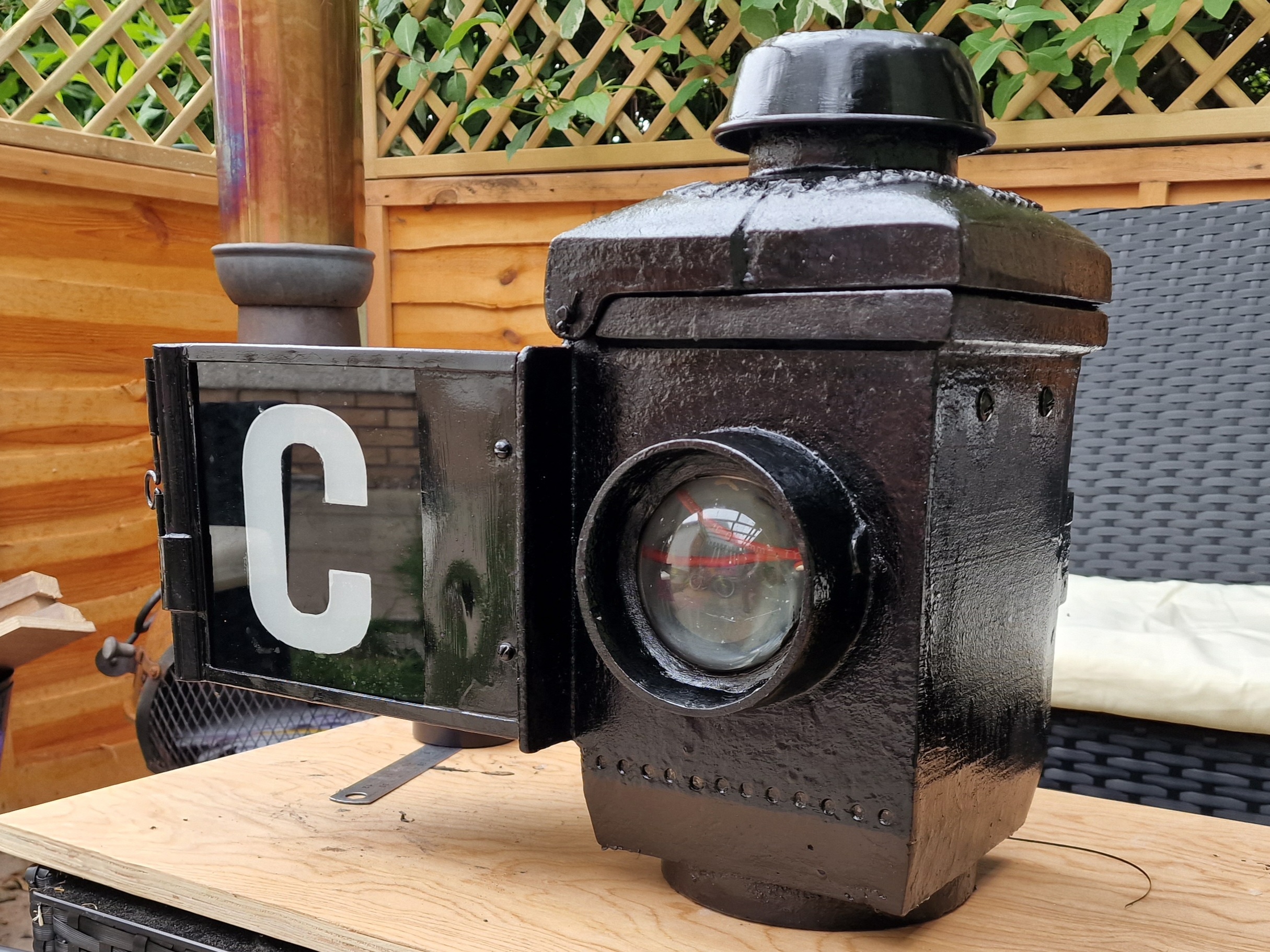
The lamp unit with the stencil on the side. Will only be see when the arm is in the off position.

How it all looks with the call-on signal in the off position.


The frame after receiving a bit of paint and a good clean up.

Aviemore signal diagram 


Wednesday, 15 June 2022

Aviemore improvement works.

 Aviemore Improvement Works.

By Robert Law

15 June 2022

Over the last two months our attention has moved to Aviemore. What was always considered to be a temporary signaling arrangement until the loop is re-instated. Has now for the time being become permanent. With this, it has been decided to make some improvements to the interlocking, to help take away human error. Which also includes the installation of a new call on signal for permissive movement when the section is not clear to the buffer ends. 


Our residents class 31 passing the work site.

The planed new signal is going on to the home signal structure. It will be a smaller arm for calling on a train. This way the signaler can inform the diver that they are permitted to continue at caution but be prepared to stop sort of any obstructions.

What is to be installed 

This is an illustration of what we are looking to install. Which is in keeping with the heritage signaling of our area. When the signal is “pulled off” it will reveal a stencil with the letter C, for Calling On. Giving the driver permission to proceed.


A start has been made.

On the signal, the spindle bracket and lamp bracket have been installed. All parts were sand blasted in the workshop, before been painted and put up.


Bottom of post

At the bottom of the post the old balance weight has been replace from a single to a double. One for the current home signal and one for the new calling on signal. Again these parts have been stripped down, sand blasted and painted. Signal wires have been attached and run under the track to the flat pulley wheel.


Replacement flat wheel.

The flat wheel opposite the signal was requiring replacement as it was only a single before. As the timber base was not in the best of condition the decision was made to use this opportunity and replace it at the same time. This picture was taken before the new wire and rope was run.


Works at the signal box end

At the other end of the signal wire run. The chain and adjustable wheel has been installed on the lever tail. The vertical and flat wheel have been installed and chain has been run to the outside of the box. Ready for the wire to be run once we have the time to do it.


The lamp and stencil holder.

The lamp unit being cleaned down with most of its paint removed. Revealing the wonderful tin work of the stencil unit. Someone had put a lot of work into building this, with it’s white metaled joints. Truly a lovely thing to work on. Unfortunately the history of where it came from is unknown to me other than it has been in storage for a very long time. If anyone knows the history behind it please send me a message!


A view of the back of the lamp holder.

Not completed but starting to look the part again.

At this moment in time the lamp unit has been fitted with a electrical lamp holder. It did not have one fitted before, as it is of the era from when everything was lit by paraffin. The lens is only loosely fitted and needs some window putty to fit it. The stencil with the letter C is still to be fabricated. As you can imagine it is not a standard item and requires something to be specially made for it.  


Interlocking designs 

Before all this “ground work” was done. A good few months was spent discussing and designing the interlocking for Speyside cabin. A lot of tea was consumed in the creation of these plans. Just when you think it is correct your independent checker would find something you had missed.


Hard to get a shot that shows the working of the interlocking.

A closer look at the slip locking for permitting opposing signals to be pulled when the box is switched out.

Several days was spent implementing the plans of the interlocking. New tappets, notches and bars made up. Lots of fun was had doing this work and I am glad to report that the diagrams were made correct and that everything worked as expected.  This is a big step in insuring that operations are controlled and reduces the risk of mistakes been made. 


Everything explained.

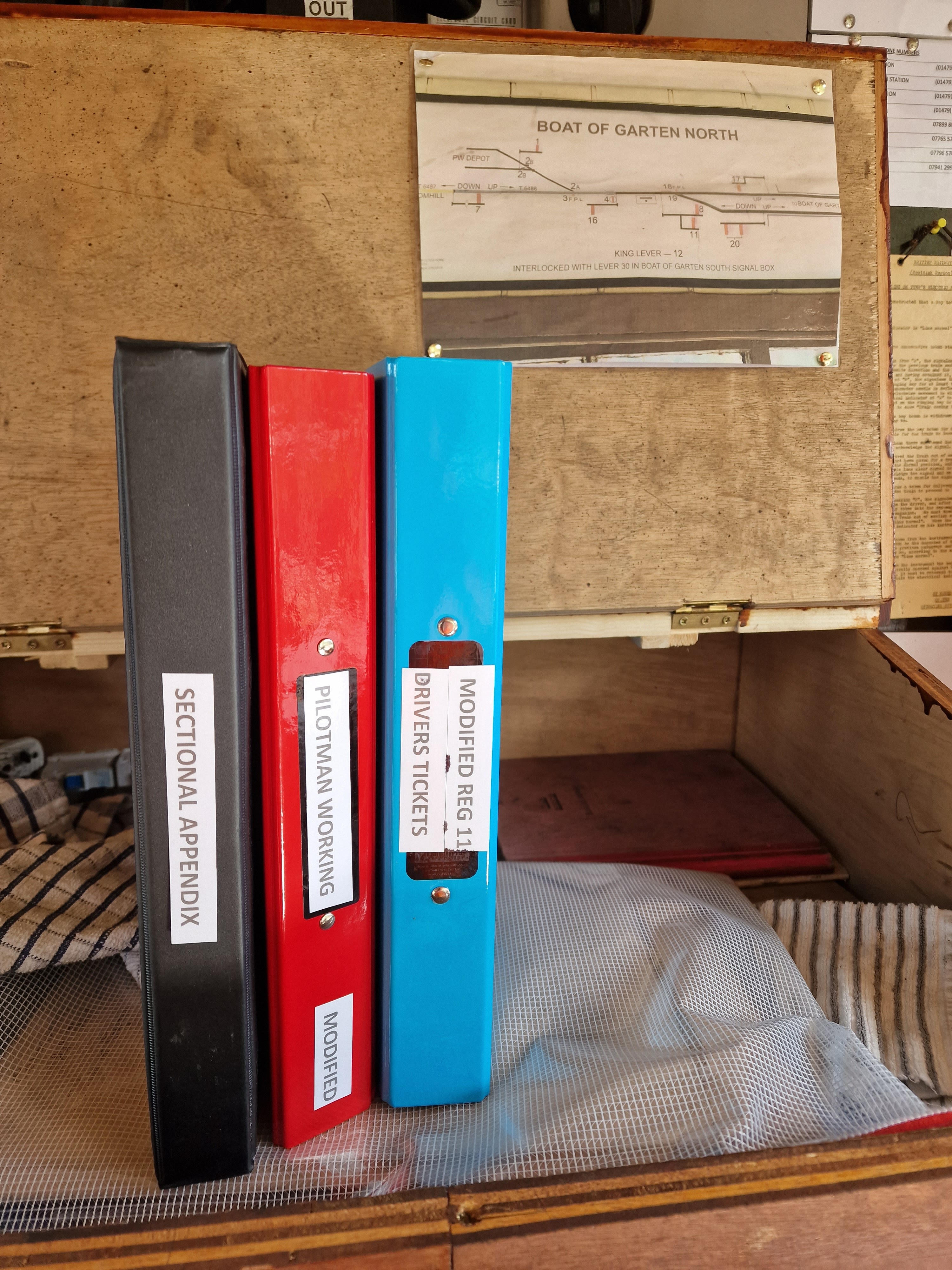
Along side all the work that the S&T department has been doing, the operational department has been keeping up with us! Each signal box now has written regulations of what and how to do it. From normal operations, to in the event of failure. This in itself is a big step forwards in running a safe railway. Just need everyone to read them now.

Sunday, 17 April 2022

Heritage signaling equipment making a come back!

 Heritage signaling equipment making a come back.

By Robert Law

16th April 2022

New pouch, with a new token!


Good Friday was a good day for Scottish signaling heritage. As there is now three operational Tyers key token sections in Scotland. Two belonging to Network rail, Dunraagit to Stranraer and Mauchline to Ayr, interestingly with an intermediate instrument at Annbank GF. Now you have a third on the Strathspey Railway. Preserving the traditional signaling method of Scotland for all to see, (When tours are available). Between Aviemore and Boat of Garten. But! There is more. The Strathspey Railway is the only one that works over 5 miles of traditional pole route! There is no multicore cables been used within the system, other than the tail cables from the end of the pole route to the signal cabins.

It has been a long time coming with various challenges on the way. The tail cable from Aviemore Speyside cabin to the pole route was found to have poor insulation and cores were leaking to earth. Which first needed to be replaced. A new cable conduit had to be run down the length of the carriage storage shed. Then there was finding a source of tokens. We, as in the railway do have some historic tokens that could have been recycled. But it was agreed it would be an act of vandalism to deface them. So we continued to look for a source of new ones which did take up a lot of time and networking. Kind donations were added to this project in the form of new token pouch’s too. Thankfully they did turn out to be the right size for the new tokens. 

This is a big step forwards for the railway and it’s aims to recreate how the original Highland Mainline looked, felt and sounded in the late 1950s early 1960s. With it’s traditional semaphore signaling, Omnibus phone systems between each signal cabin. All of which is fitting for our heritage railway.


Aviemore KT instrument

The withdrawal of the old “test” tokens and the new WR keys installed. Note, that one token has been withdrawn from the instrument, ready for the first train of the day to Boat of Garten. Which is why the indicator is showing train going to. The system has increased from 8 test tokens to 12 WR keys.


Boat of Garten KT instrument

Again, but this time at Boat of Garten. Showing the withdrawal of the old “test” tokens and the new WR keys installed. Note this picture was taken after the token had been withdrawn from the Aviemore instrument, ready for the first train of the day. Which is why the indicator is showing train coming from. The system has increased from 8 test tokens to 12 WR keys.


The official change over picture

This was the last part of the puzzle withdrawing the old temporary “test” token from the train crew. Briefing them on what is happening, informing them of the new operation notice that has just been released and handing them the new WR key. Almost job done!
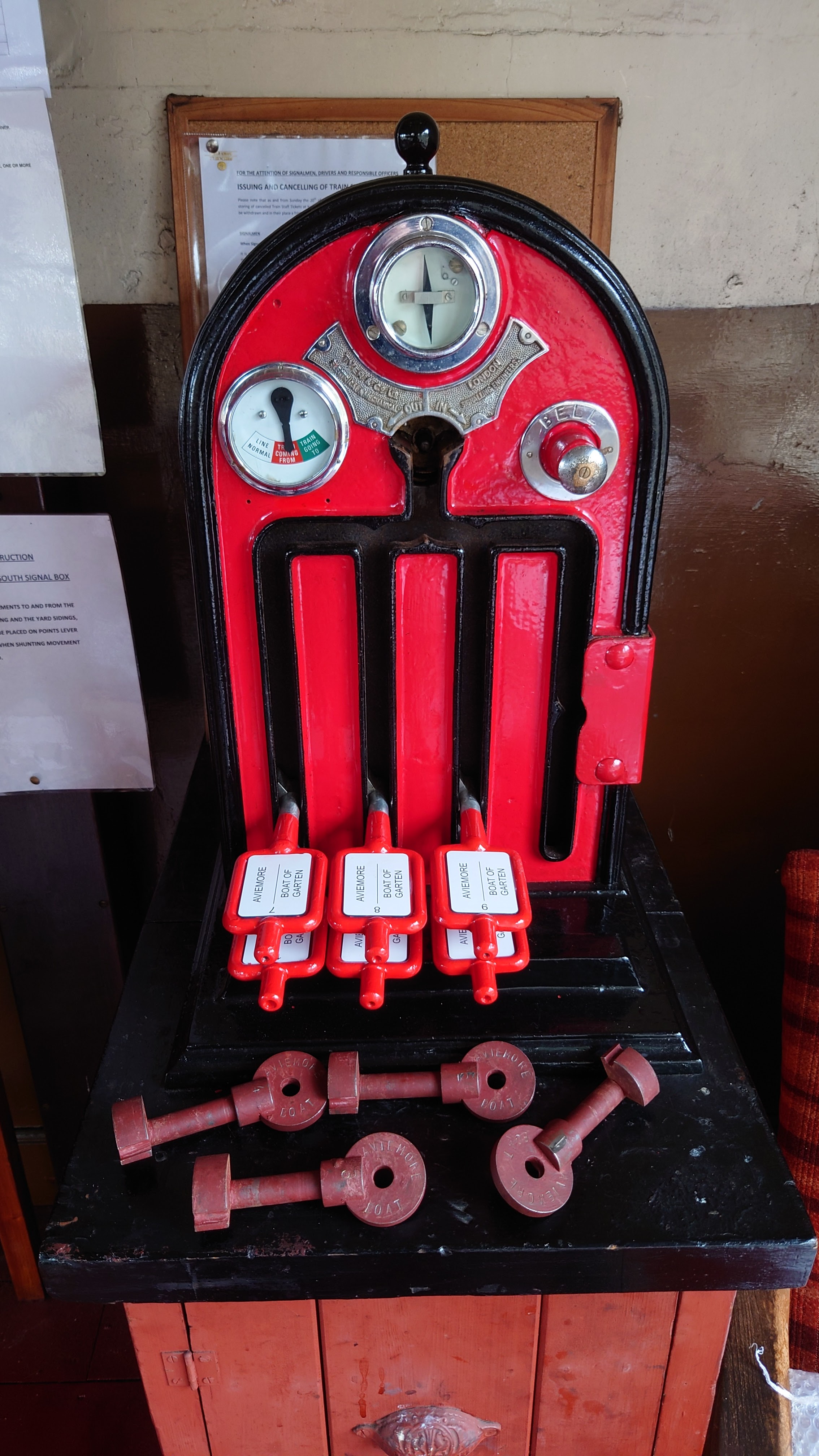
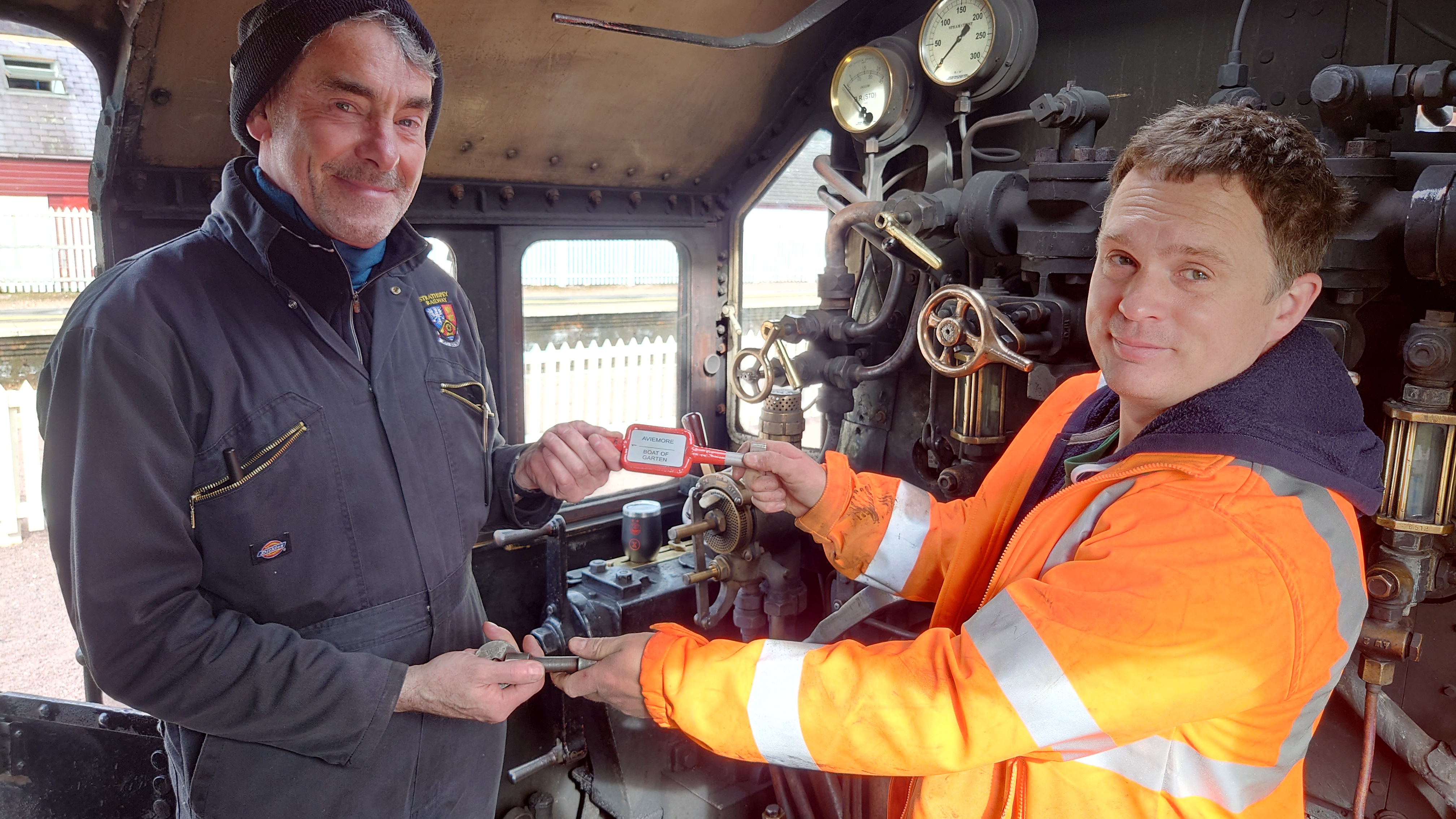

The new key in use for the first run round of the day at Aviemore loop. 


The last thing to be done. Destroying the old Temporary test tokens. Job done!